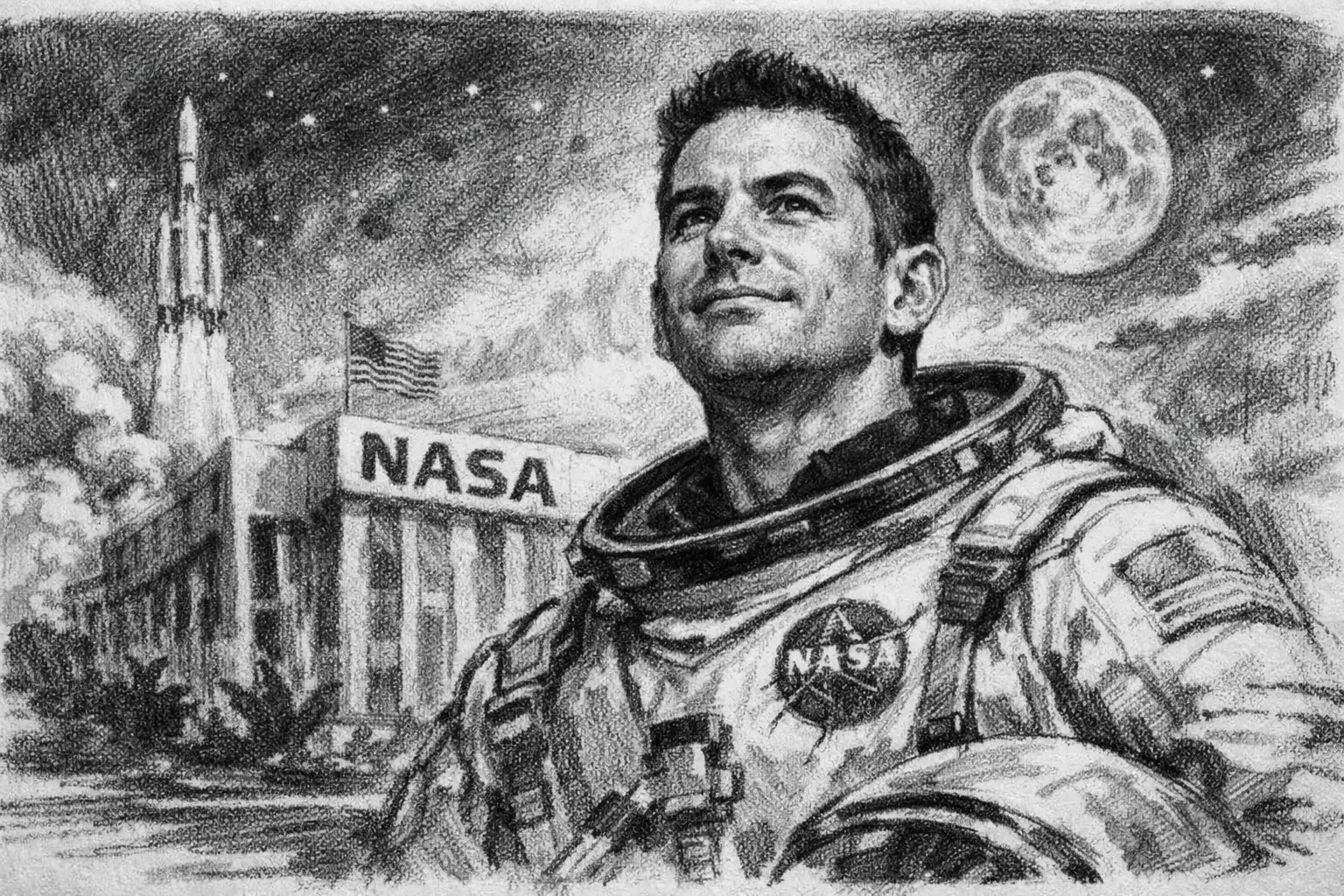
On December 17, 2025, the U.S. Senate confirmed billionaire entrepreneur and private astronaut Jared Isaacman as the 15th Administrator of the National Aeronautics and Space Administration (NASA), in a decisive 67–30 vote that concludes an unusual and at times turbulent nomination process. This moment marks not only the culmination of a contentious political journey but also the beginning of a fresh era for America’s space agency at a time of renewed global competition and ambition.
Isaacman’s story stretches far beyond his new title. As founder of the payment processing company Shift4, co-founder of the private aerospace operator Draken International, and a pioneering figure in the commercial spaceflight sector, he brings to NASA both entrepreneurial energy and firsthand space experience. He commanded Inspiration4, the first all-civilian orbital mission, and later led Polaris Dawn, during which he became the first private citizen to perform a spacewalk—a milestone achievement in the expansion of human access to space.
These experiences are more than personal accolades; they reflect a broader shift in how humans reach and explore space. For decades, NASA stood almost entirely apart from non-government space efforts. Today, public-private partnerships are central to America’s space strategy, from resupplying the International Space Station to developing next-generation lunar landers. This synergy of public mission and private innovation now sits at the heart of the agency’s future, and Isaacman stands uniquely positioned at that intersection.
Yet the road to confirmation was far from straightforward. Isaacman’s initial nomination came from then-President Donald Trump in December 2024, a bold gesture that garnered support from both space advocates and certain members of Congress. That nomination was poised to sail through the Senate, but in late May 2025, the White House abruptly withdrew it amid political tensions that reverberated far beyond NASA’s corridors. At the time, the pullback was officially attributed to concerns over “prior associations” — shorthand in Washington for tangled political and personal networks.
Among those entanglements was Isaacman’s relationship with Elon Musk and SpaceX. In an era when SpaceX is one of NASA’s most indispensable partners—providing crew and cargo transport to low-Earth orbit and helping develop lunar landing systems—such ties are inevitably scrutinized. But beyond questions over industry affiliations, Isaacman suffered a degree of personal malice in public discourse attached to his first private spacewalk. This groundbreaking achievement, undertaken not in the service of a state space agency but as part of a privately funded mission, became a focal point for critics who cast him as emblematic of what they saw as the commercialization of space at the expense of broader scientific goals.
The uproar was disproportionate. Extravehicular activity in space is an undeniably risky endeavor, and to perform it as a private astronaut testifies to a spirit of exploration and courage. Yet that same spirit was twisted in commentary that attempted to diminish his contributions or paint them as reckless. Rather than undermining Isaacman, however, such reactions underscored how deeply spaceflight—once the domain of national agencies and government astronauts—has shifted into a space of shared human endeavor where private actors contribute not only resources but vision and risk.
When the nomination was eventually renominated in November 2025, it was against the backdrop of a changing geopolitical and technological landscape. The Senate hearings in early December centered on Isaacman’s vision for NASA amid key challenges: execution of the Artemis program to return humans to the Moon, managing partnerships with commercial launch providers, defending scientific budgets, and ensuring that NASA’s priorities serve not only exploration but national strategy. In those hearings, Isaacman made clear that he sees NASA as a steward of the American frontier in space—a role that demands efficiency, innovation, and urgency.
Crucially, he placed the U.S. space program within the larger context of global competition, particularly with China. As China accelerates its lunar ambitions and expands its presence in Earth orbit with the Tiangong space station and other programs, NASA has a renewed imperative not just to explore but to lead. The space race of the twenty-first century, driven by both geopolitical rivalry and economic opportunity, requires leadership that can marshal resources, forge international partnerships, and harness private sector ingenuity without losing sight of science and exploration. It’s a delicate balance, but one that Isaacman’s unique background equips him to navigate.
For NASA employees, scientists, engineers, and the broader public who watch from Earth and from orbit, this leadership moment is vital. A NASA Administrator today must not only manage the agency’s technical and budgetary challenges but also embody the optimism and ambition that justify public support for human spaceflight. The Artemis missions, planned to land astronauts on the Moon by the late 2020s, require not just rockets and habitats but clarity of purpose and resolve in the face of both international rivalry and domestic skepticism.
In welcoming Jared Isaacman as NASA’s leader, the United States acknowledges that exploration is not the domain of a single sector or mindset. It is a collective endeavor that demands cooperation between government and industry, between tradition and innovation. Isaacman’s journey—from private astronaut to NASA Administrator—is emblematic of that bridge, and his confirmation signals that this nation is ready to advance into a new chapter of space exploration with confidence and ambition.
As NASA charts its course to the Moon, to Mars, and beyond, it does so with a leader who has walked in the very vacuum its astronauts explore. That experience, coupled with a passion for discovery and an understanding of the evolving landscape of spaceflight, positions him to guide the agency at a transformative moment. The path ahead will be neither simple nor certain, but with leadership that reflects both the heritage of NASA and the promise of future frontiers, the United States stands poised to meet the challenges of this renewed space race and, in doing so, continue humanity’s journey to the stars.