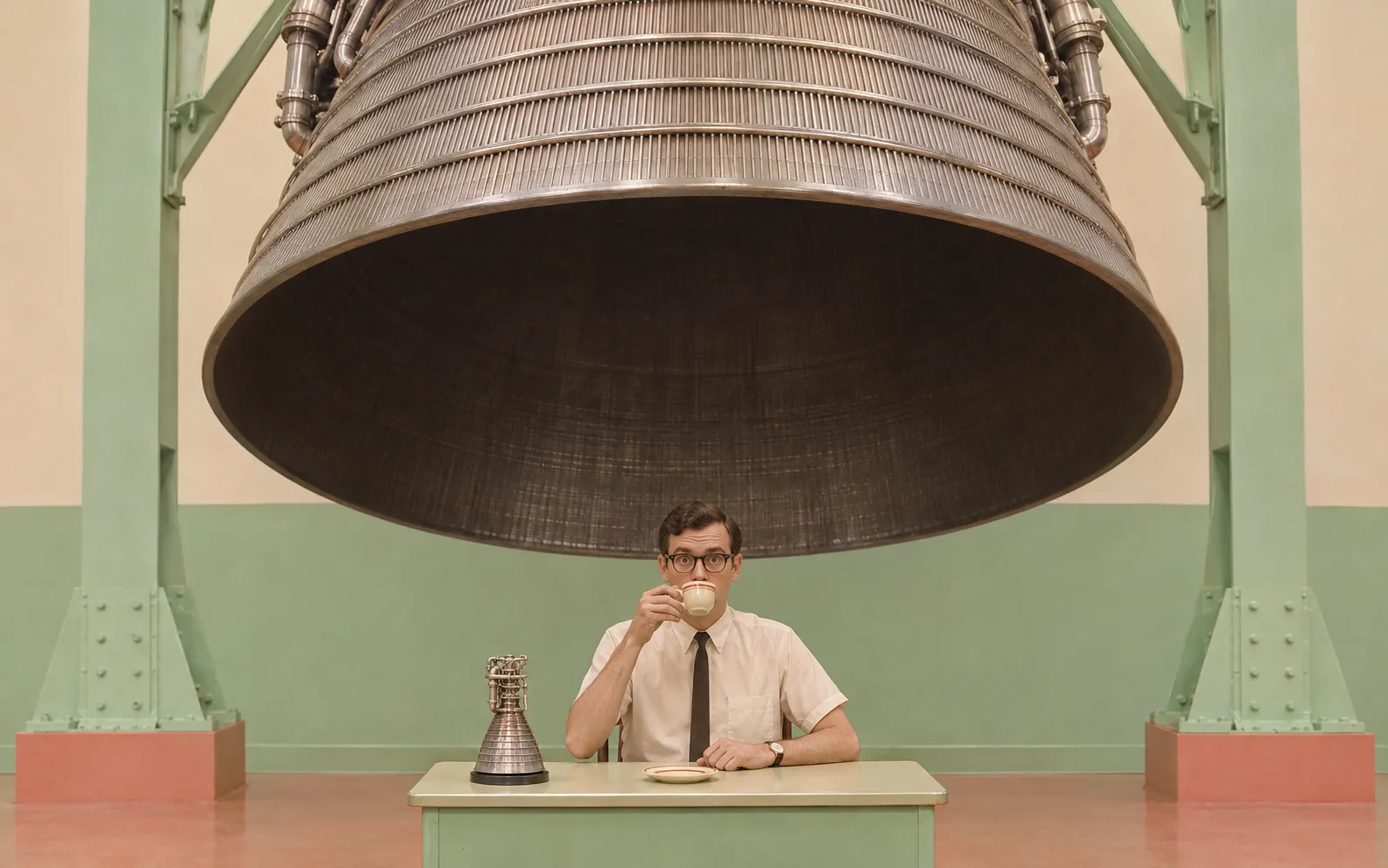
Most people experience temptation near a bakery. Elon Musk experiences it near the theoretical limits of a methane engine. On November 7, he posted that it was “so tempting” to replace the Starship booster’s outer Raptor 3 engines, rated in his post at 250 tonnes of thrust, with 500 tonne Raptor 4s. A passing thought, casually delivered. Somewhere in the imaginary film version, an engineer slowly lowers a coffee cup.
The crucial word is “tempting”. This is an idea, not a published specification, approved redesign, or demonstrated engine. Nevertheless, it offers a splendid case study in how little language is needed to imply an enormous amount of plumbing. A social platform asks what is happening. Musk proposes doubling something that already produces controlled fire on an industrial scale. The character limit remains intact; the engineering workload potentially does not.
Start with the arithmetic, which is unusually entertaining. SpaceX describes Super Heavy as having 33 engines: 13 manoeuvrable inner engines and 20 around the perimeter. Assume that arrangement stays, every outer engine becomes a 500 tonne unit, and the inner engines retain the post’s 250 tonne rating. Total thrust rises from 8,250 to 13,250 tonnes-force, approximately 61 percent. That is an illustrative calculation, not an announced vehicle specification. Even with that qualification, the spreadsheet deserves a moment outside.
The outer ring is a meaningful choice. Those engines provide fixed thrust, while the inner engines supply steering authority and participate in the return manoeuvres. There is an appealing division of labour here: enormous engines for the initial shove, smaller ones for the delicate business of bringing the machinery home. Keeping smaller central engines could also preserve useful landing thrust levels, although their suitability would still depend on booster mass and available throttling range. It resembles employing weightlifters to move a grand piano and asking somebody else to play it. Whether that arrangement works depends on integration, control margins, and mass, not the elegance of the metaphor.
Unfortunately, thrust does not arrive through a software update. NASA’s thrust equation connects it to propellant flow, exhaust velocity, and nozzle pressure. At unchanged specific impulse, doubling thrust requires doubling propellant mass flow. Pumps, valves, injectors, cooling passages, and feed systems would therefore face substantial demands. Higher chamber pressure, larger dimensions, or some combination might enter the design. The post specifies none of this. “Make it twice as powerful” is a concise sentence because the missing details occupy several departments.
Nor does 61 percent more thrust mean 61 percent more payload. The rocket equation remains stubbornly interested in exhaust velocity and mass ratio. Greater thrust can help lift a heavier vehicle or reduce gravity losses through an appropriate ascent profile. Bigger engines can also add dry mass; increased flow can empty unchanged tanks faster. Any payload gain needs a complete vehicle and trajectory analysis. Physics has once again declined an invitation to participate in the marketing campaign, citing previous commitments.
Then comes the hardware that receives no applause. A credible redesign would need assessments of engine mounts, the thrust structure, vibration, heat, and the consequences of losing an engine. A failed 500 tonne unit removes twice the absolute thrust of a failed 250 tonne unit, although overall tolerance depends on the vehicle. The launch mount, exhaust handling, water systems, and acoustic environment also belong in the investigation. Concrete has no account on X, but it maintains firm opinions about loads.
The possible reward extends beyond spectacular departures. If higher thrust eventually enables more useful payload to orbit at acceptable cost and reliability, tanker flights could deliver more propellant. NASA’s lunar architecture includes tanker Starships supplying an orbital depot. Better delivery per flight could reduce the launches needed for a given propellant requirement, subject to the rest of the mission design. That would be consequential. Still, an upgraded booster cannot independently solve orbital transfer, storage losses, docking, or landing. The Moon does not accept enthusiasm as fuel.
There is also an organisational experiment hidden inside the engineering one. Public speculation by a founder gives enthusiasts something unusually concrete to discuss, and it can communicate ambition with remarkable efficiency. It also leaves suppliers, customers, and employees interpreting the distance between curiosity and commitment. Is this a research question, a likely direction, or Monday’s meeting agenda? The post cannot tell us. The comic possibilities are obvious; claims that teams actually changed their plans would require evidence we do not have.
Commercially, a successful engine could strengthen the case for heavier payloads and more ambitious missions. An expensive development detour could instead consume time, test capacity, and money. Those possibilities coexist perfectly well. Customers ultimately buy delivered capability, while nearby communities experience launches through sound, disruption, and local environmental effects. Any changed configuration deserves assessment on its actual characteristics. Neither a bigger thrust number nor a smaller number of launches automatically settles the balance. The excitement is global; the windows are local.
Perhaps that is the real fascination of this tiny post. It compresses a vast chain of possible consequences into the language of someone considering dessert. There is something exhilarating about watching ambitious engineering questions escape into public view, where anyone can inspect the arithmetic and argue about the consequences. There is something equally funny about the mismatch between the ease of proposing a larger engine and the labour of making one dependable. Musk supplies the temptation. Everyone else, potentially, supplies the drawings, test stands, invoices, and ear protection.



No comments yet